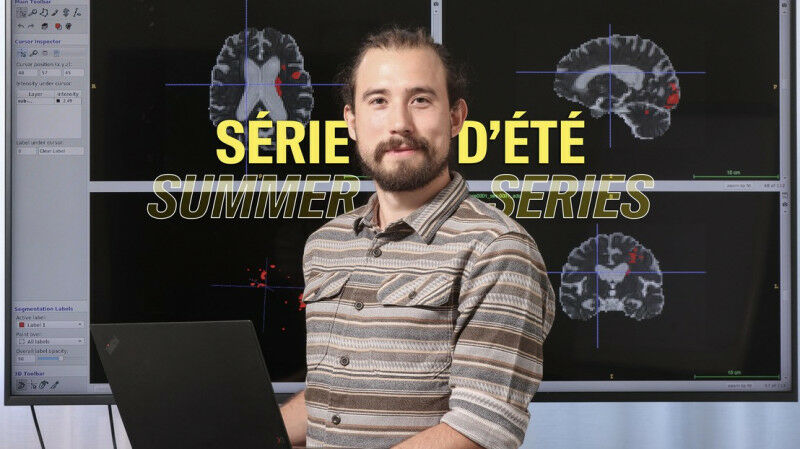
 Antoine Madrona teamed up with Lausanne University Hospital (CHUV) for his Master’s project.
Antoine Madrona teamed up with Lausanne University Hospital (CHUV) for his Master's project. EPFL / Alain Herzog - SUMMER SERIES - Master's project (11). EPFL student Antoine Madrona helped develop an algorithm that, after being trained on data from many different hospitals, can improve stroke diagnosis - all while protecting patient confidentiality. The first few hours following a stroke are crucial. To be able to treat a patient effectively, doctors must rapidly localize the damaged blood vessel and determine what kind of stroke occurred. In most cases, either a ruptured blood vessel releases blood into the brain, or a blood clot obstructs a blood vessel in the brain. Patients who experience the second type of stroke are prescribed medication to dissolve the blood clot.
TO READ THIS ARTICLE, CREATE YOUR ACCOUNT
And extend your reading, free of charge and with no commitment.
Your Benefits
- Access to all content
- Receive newsmails for news and jobs
- Post ads