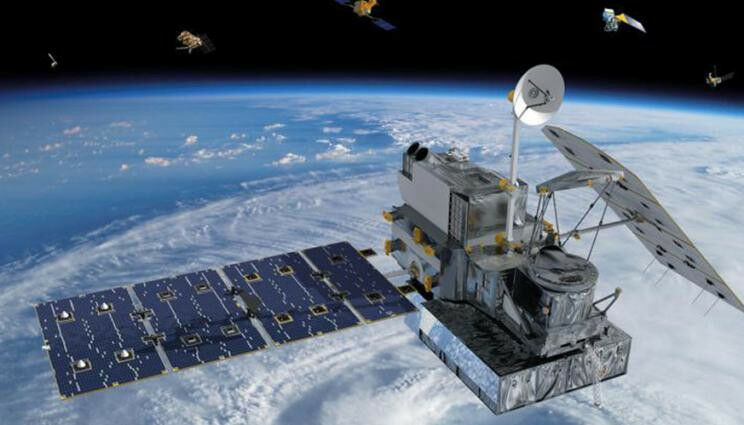
New research provides an improved understanding of the causes of historical changes in climate and increases confidence in model simulations of continued global warming over the 21st century. Image courtesy of NASA.
New research provides an improved understanding of the causes of historical changes in climate and increases confidence in model simulations of continued global warming over the 21st century. Image courtesy of NASA. Satellite observations and computer simulations are important tools for understanding past changes in Earth's climate and for projecting future changes. However, satellite observations consistently show less warming than climate model simulations from 1979 to the present, especially in the tropical troposphere (the lowest ~15km of Earth's atmosphere). This difference has raised concerns that models may overstate future temperature changes. Rather than being an indicator of fundamental model errors, the model-satellite difference can largely be explained by natural fluctuations in Earth's climate and imperfections in climate-model forcing agents, according to new research by Lawrence Livermore National Laboratory (LLNL) scientists. "Natural climate variability appears to have partly masked warming over the satellite era," said Stephen Po-Chedley, a LLNL climate scientist and lead author of a paper appearing in the Proceedings of the National Academy of Sciences .
TO READ THIS ARTICLE, CREATE YOUR ACCOUNT
And extend your reading, free of charge and with no commitment.