Image courtesy Marco Abis on flickr
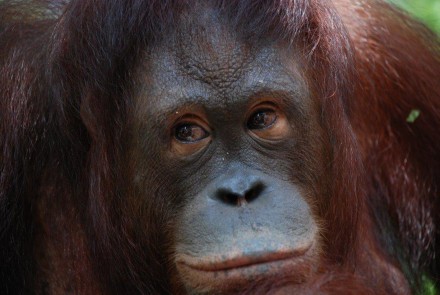
The first comprehensive history of the orangutan-human encounter and the thin line that separates the two beings will be launched in Canberra on Thursday. In his new book, Wild Man from Borneo , Professor Robert Cribb from The Australian National University examines how the most humanlike of all the great apes has been cherished, used and abused since coming to the attention of Europeans more than 400 years ago. "The orangutan stands on that most uncomfortable dividing line between human and animal," Professor Cribb said. "For us, it exists on what has been described as 'the dangerous edge of the garden of nature'." Professor Cribb is based at the School of Culture, History and Language in the ANU College of Asia and the Pacific. The book is co-authored by Professor Helen Gilbert from Royal Holloway College in London, and Professor Helen Tiffin, formerly of the University of Queensland. Professor Cribb says our long-held fascination with the animal only found on Borneo and Sumatra stems from how human the animal is. These qualities include social circles beyond partners and children, but also being capable of living like hermits.
TO READ THIS ARTICLE, CREATE YOUR ACCOUNT
And extend your reading, free of charge and with no commitment.