This system will help pave the way for optimised flight routes that will improve operational efficiency and support greener commercial aviation, says Salah Sukkarieh.
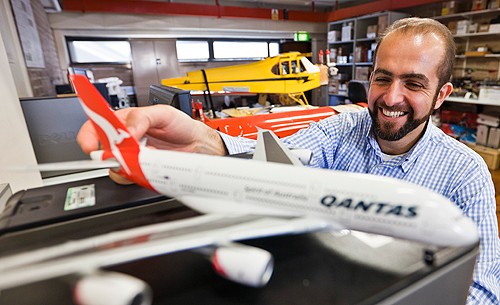
The University of Sydney and Qantas have entered into a four-year partnership to develop a flight planning system that will help the airline fly optimised routes, reduce fuel consumption and improve operational effectiveness. The Qantas Future Flight Planning Project (QFFPP) follows closely on the tail of a successful pilot program that targeted the development and demonstration of a prototype commercial aviation flight-planning system. Professor Salah Sukkarieh, the Australian Centre for Field Robotics' (ACFR) Director of Research and Innovation, says the commencement of the QFFPP punctuated a decade of research in the area of flight planning and control, and multi-vehicle coordination and optimisation. "Our initial work looked at how aerodynamics, flight mechanics, large-scale optimisation and machine learning algorithms can be used to design better flight planning routines and fuel prediction models. "We believe this will help pave the way for optimised flight routes that will improve operational efficiency for Qantas - complementing its existing focus on new navigation technology - and support greener commercial aviation," says Professor Sukkarieh. The agreement with the University will look at further developing the system as well as conduct new research into operational factors such as weather avoidance and traffic flow. The project will support six research fellows and up to 10 PhD students.
TO READ THIS ARTICLE, CREATE YOUR ACCOUNT
And extend your reading, free of charge and with no commitment.