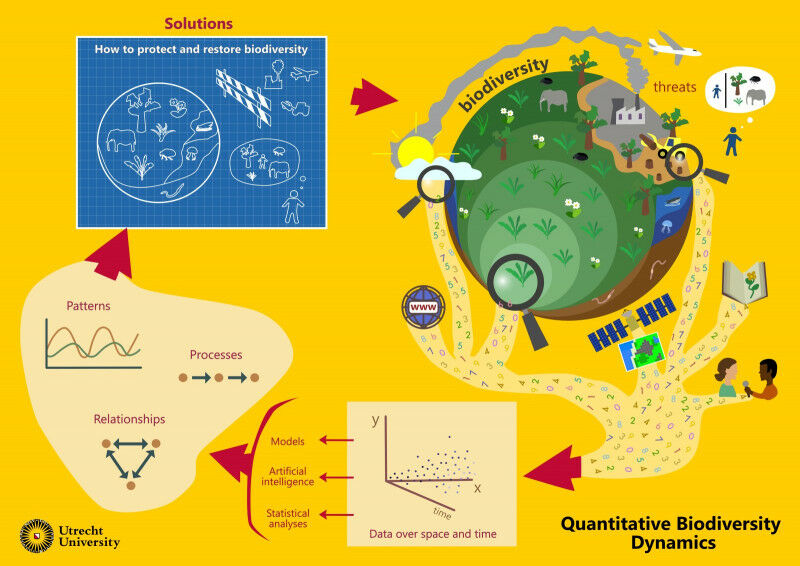
The research unit seeks patterns within data that lead to insights about how biodiversity can be restored and protected (click to enlarge).
The research unit seeks patterns within data that lead to insights about how biodiversity can be restored and protected (click to enlarge) . Finding ways to make the best use of collected data to gain insight into biodiversity and how it changes over time. That is the goal of the new Quantitative Biodiversity Dynamics research unit. Yesterday, the unit, which is linked to the Botanic Gardens and the Department of Biology , presented itself to colleagues and students. Group leader Edwin Pos : "Ultimately, we hope that our fundamental research will contribute to guidelines on how to better protect and restore nature." Pos readily acknowledges that the group's name is a bit of a mouthful, but it does effectively convey their focus. "Our primary concern is examining biodiversity, the diversity of life in a given location, " Pos explains. "However, our scope is not restricted to a single moment in time; we are also investigating how biodiversity changes over time.
TO READ THIS ARTICLE, CREATE YOUR ACCOUNT
And extend your reading, free of charge and with no commitment.