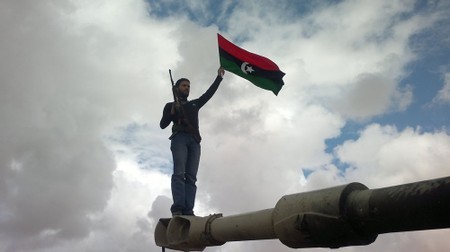
Hussein Elkhafaifi A rebel waves a Libyan flag while standing atop a tank gun.
In the 21st century, the revolution may not be televised - but it likely will be tweeted, blogged, texted and organized on Facebook, recent experience suggests. After analyzing more than 3 million tweets, gigabytes of YouTube content and thousands of blog posts, a new study finds that social media played a central role in shaping political debates in the Arab Spring. Conversations about revolution often preceded major events, and social media has carried inspiring stories of protest across international borders.
- "Our evidence suggests that social media carried a cascade of messages about freedom and democracy across North Africa and the Middle East, and helped raise expectations for the success of political uprising,” said Philip Howard , the project lead and an associate professor in communication at the University of Washington. "People who shared interest in democracy built extensive social networks and organized political action. Social media became a critical part of the toolkit for greater freedom. During the week before Egyptian president Hosni Mubarak's resignation, for example, the total rate of tweets from Egypt — and around the world — about political change in that country ballooned from 2,300 a day to 230,000 a day.
TO READ THIS ARTICLE, CREATE YOUR ACCOUNT
And extend your reading, free of charge and with no commitment.