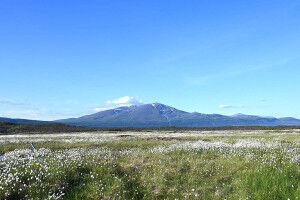
Atmospheric sciences Atul Jain led a group that studied the global effects of nitrogen on carbon dioxide emissions from land use change, such as deforestation to expand cropland.
CHAMPAIGN, Ill. A new global-scale modeling study that takes into account nitrogen - a key nutrient for plants - estimates that carbon emissions from human activities on land were 40 percent higher in the 1990s than in studies that did not account for nitrogen. Researchers at the University of Illinois at Urbana-Champaign and the University of Bristol Cabot Institute published their findings in the journal Global Change Biology. The findings will be a part of the upcoming Fifth Assessment Report from the Intergovernmental Panel on Climate Change. "One nutrient can make a huge impact on the carbon cycle and net emissions of the greenhouse gas carbon dioxide," said study leader Atul Jain, a professor of atmospheric sciences at the U. of I. "We know that climate is changing, but the question is how much? To understand that, we have to understand interactive feedback processes - the interactions of climate with the land, but also interactions between nutrients within the land." The carbon cycle is a balance of carbon emissions into the atmosphere and absorption by oceans and terrestrial ecosystems. Carbon is absorbed by plants during photosynthesis and by the oceans through sea-air gas exchange. On the other side of the cycle, carbon is released by burning fossil fuels and by changes in land use - deforestation to expand croplands, for example.
TO READ THIS ARTICLE, CREATE YOUR ACCOUNT
And extend your reading, free of charge and with no commitment.