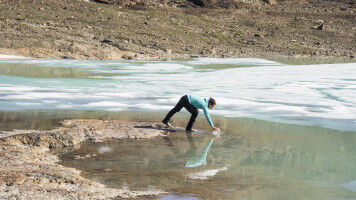
T Klinger/U of Washington Oysters are among the species thought to be negatively impacted by ocean acidification.
Students already knowledgeable about the science behind ocean acidification and warming will learn more about the challenges those ocean changes pose for tribes, shellfish growers and other sectors of society - as well as helping seek solutions - under a just-announced National Science Foundation grant of $3 million. In what is the first Integrative Graduate Education and Research Traineeship program organized through the UW's College of the Environment , the money will be used over five years to develop a program for doctoral students focused on societal and environmental issues related to ocean changes. It's the first such NSF-funded traineeship program in the nation that focuses on ocean acidification, warming and other changes in the ocean, according to Terrie Klinger , a UW associate professor of marine and environmental affairs who leads the program.
"There's been a great deal of attention on potential impacts of climate change but much less on ocean change, although the effects we will have to cope with may be just as large,” Klinger says. "The students we train are inheritors of a changing ocean; its condition and rate of change will determine critical aspects of their future. Excess carbon dioxide absorbed into the ocean causes acidification, which not only changes the acidity but, more importantly, changes the chemical mix in the water so that corals, shellfish and other organisms can't get enough calcium carbonate - or chalk - to build and maintain shells or skeletons.
TO READ THIS ARTICLE, CREATE YOUR ACCOUNT
And extend your reading, free of charge and with no commitment.