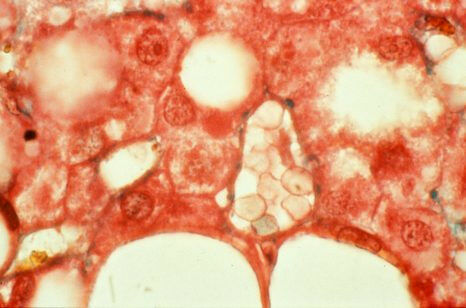
 Detail of a steatosis, accumulation of a fat, triglyceride, in the liver cell.
Detail of a steatosis, accumulation of a fat, triglyceride, in the liver cell. Inserm/Hadchouel, Michelle - A research team from AP-HP, Inserm and Sorbonne University carried out work, within the IHU ICAN, on the effects of bariatric surgery on the severity of liver damage in patients with NASH (Non-Alcoholic Steatohepatitis or Metabolic Steatohepatitis) and severe fibrosis (bridge fibrosis or compensated cirrhosis). This study shows that in 50% of patients who underwent bariatric surgery, despite significant weight loss (20% to 30% of initial BMI) and improvement in metabolic risk factors (mainly type 2 diabetes), severe fibrosis persists in the medium term (5 years after surgery). The results of this work were published on January 25, 2022 in the journal Hepatology . Obesity in France concerns 17% of the adult population and it increasingly affects children and adolescents. It has many consequences on the state of health of people who are affected, including the development of "fatty liver" (liver steatosis). Hepatic steatosis is defined by the accumulation of fat in liver cells favored by the presence of metabolic risk factors (particularly diabetes and obesity).
TO READ THIS ARTICLE, CREATE YOUR ACCOUNT
And extend your reading, free of charge and with no commitment.
Your Benefits
- Access to all content
- Receive newsmails for news and jobs
- Post ads