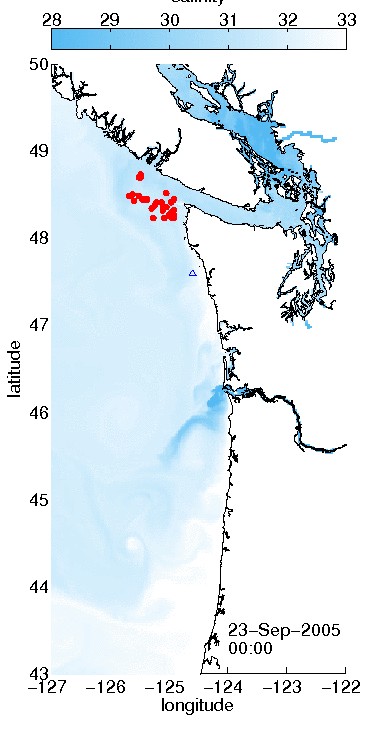
S. Giddings / UCSD The model shows how organisms growing off Vancouver Island in late September 2005 got transported by wind-driven currents to hit the southern Washington coast in October.
University of Washington - Late summer is the peak time for harmful algae that can turn lakes into toxic scum, cancelling fishing trips and fouling water supplies. While the Pacific Northwest doesn't get anything near the activity that turned parts of Lake Erie into bright green slime, our coasts are vulnerable in late summer to this largely unpredictable - and in our case unseen - menace. University of Washington oceanographers have created a tool to help predict when harmful algae might strike. A few days' warning could prevent last-minute beach closures or shellfish harvest losses, and reduce the risk of eating a clam filled with a neurotoxin that can lead to permanent short-term memory loss, or even death. The researchers developed a computer model to track when harmful algae will get carried to Washington and Oregon beaches. A study published in April in the Journal of Geophysical Research shows the model, when fed the right data, could predict most of the toxic algae events recorded in field studies between 2004 and 2007. The paper is part of a larger UW project to model and predict toxic algal blooms in the Pacific Northwest, involving years of research into how the blooms form offshore and travel to coastal waters.
TO READ THIS ARTICLE, CREATE YOUR ACCOUNT
And extend your reading, free of charge and with no commitment.