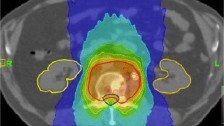
Image-guided intensity modulated RT plan for a patient with a spinal tumour. The radiation dose is shaped away from the kidneys (yellow outlines) and the spinal nerve roots (inside the green outline). The colour wash represents radiation dose Credit: Andy Parker
A collaborative project between physicists, oncologists and computer scientists at Oxford and Cambridge Universities, launched last month, will develop improved tools for the planning of high precision radiotherapy. Accel-RT will also help overcome time constraints that currently limit the use of complex radiotherapy treatment. The system will operate as a 'virtual oncologist', observing what the oncologist is treating and using novel search algorithms to recall similar cases from a clinical archive." - —Andy Parker Radiation therapy (radiotherapy) is an essential part of cancer treatment and is used in the treatment of 40 per cent of all patients who are cured of their disease. All radiotherapy treatments work by the application of ionising radiation to malignant cells in tumours. The free radicals released by this process damage the DNA of the exposed tissue, killing off the cancerous cells. By targeting the radiation to the tumour, the damage to surrounding healthy tissue is minimised. Modern radiotherapy machines can now deliver highly targeted radiotherapy treatment.
TO READ THIS ARTICLE, CREATE YOUR ACCOUNT
And extend your reading, free of charge and with no commitment.