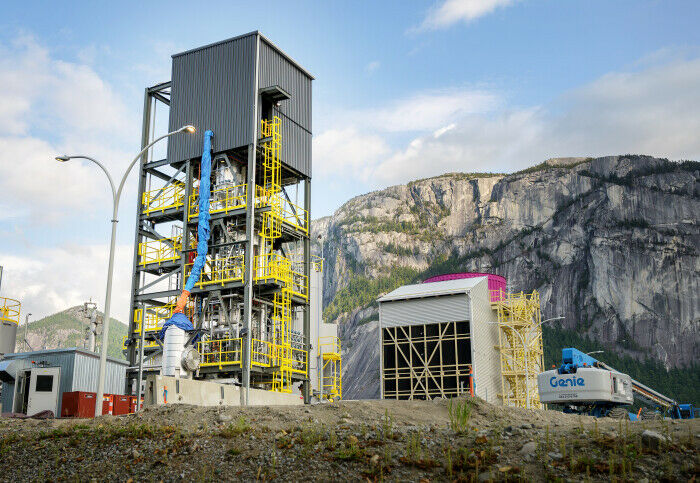
A direct air carbon capture plant in Canada
A direct air carbon capture plant in Canada - Governments that over-rely on carbon dioxide removal (CDR) to meet their climate targets may be breaching international law, says a new study. The research team, at the University of Oxford and Imperial College London, are calling for faster cuts in greenhouse gas emissions to limit countries' dependence on CDR, and warn that they will otherwise risk legal challenges. The study is . Without legal guidance and limits on CDR use in climate targets, over-reliance on removals may be the next aspect of climate action failure to be challenged in court. Professor Joeri Rogelj - To limit the effects of global warming, carbon dioxide (CO2) emissions from human activities must decline to 'net zero' - where the amount of CO2 we emit into the atmosphere is equal to the amount we remove from it. To keep within the 1.5°C limit of the 2015 Paris Agreement, many states have drawn up plans that include removing CO2 alongside reducing emissions. CDR is any process that captures CO2 from the atmosphere and stores it, whether on land, in the ocean, in geological formations, or in products.
TO READ THIS ARTICLE, CREATE YOUR ACCOUNT
And extend your reading, free of charge and with no commitment.