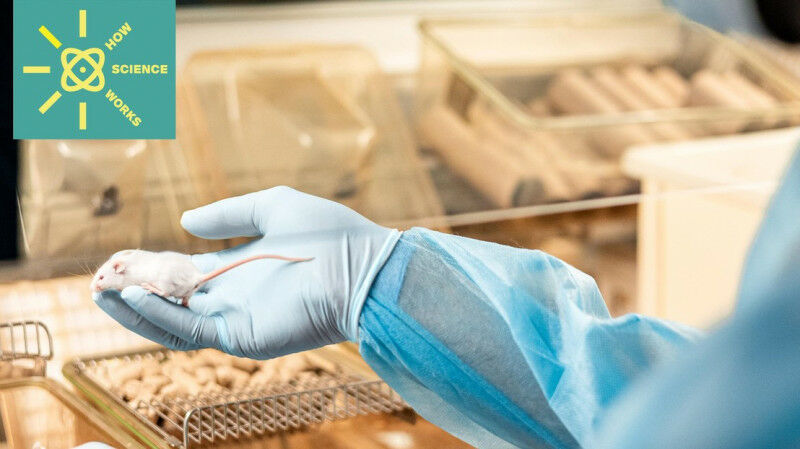
 EPFL promotes the use of gentle handling techniques and trains animal caretakers and experimenters to avoid tail-handling whenever possible.
EPFL promotes the use of gentle handling techniques and trains animal caretakers and experimenters to avoid tail-handling whenever possible. Selina Slamanig, GBS St. Gallen SUMMER SERIES: HOW SCIENCE WORKS Despite the many advancements in developing innovative alternative methods, animal testing still plays an important role in biological and medical research, enabling scientists to make key new discoveries. At EPFL, performing high-quality research is a priority for scientists, as is taking proper care of the mice, rats and fish in the facilities. On a rainy day in June 2020, Georgy Froté got up and went for a walk at the Balgrist University Hospital on the shores of Lake Zurich. Taking one step after another, he succeeded in walking 17 meters entirely on his own. "Nobody thought this was possible!" he says, wishing he'd gone farther. Froté, who is from the Jura region, lost the use of both of his legs after a serious motorcycle accident in 2010.
TO READ THIS ARTICLE, CREATE YOUR ACCOUNT
And extend your reading, free of charge and with no commitment.
Your Benefits
- Access to all content
- Receive newsmails for news and jobs
- Post ads