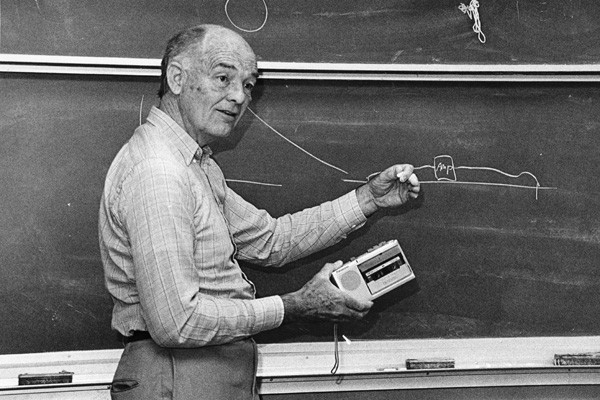
Robert Helliwell, an emeritus professor of electrical engineering, was remembered as ’a man of great ideas and inventiveness.’
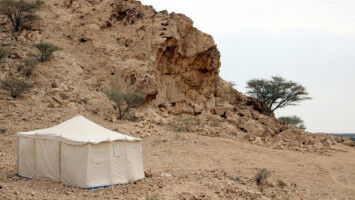
Robert Helliwell pioneered the study of how radio waves - both those naturally generated by lightning and manmade signals from a radio transmitter in Antarctica - interact with charged particles in the upper atmosphere. BY MELISSAE FELLET Late one night in 1950, a graduate student was monitoring radio waves emitted by distant lightning when strange descending whistling tones came from a speaker. The student, Jack Mallinckrodt, mentioned the experience to his adviser, Robert Helliwell. "I suggested that if he took a short vacation perhaps the sounds would go away," Helliwell wrote in an article for the October 1982 issue of Stanford Engineer . "But he didn't and they didn't. My curiosity was finally aroused and I spent a late night with Jack at the receiving station. Luckily, we both heard two distinct whistlers and I was instantly converted to belief in the reality of a strange new phenomenon." This chance observation started Helliwell on decades of research that led him from Stanford to Antarctica as he followed these mysterious radio noises and later sought to reproduce them with a transmitter.
TO READ THIS ARTICLE, CREATE YOUR ACCOUNT
And extend your reading, free of charge and with no commitment.