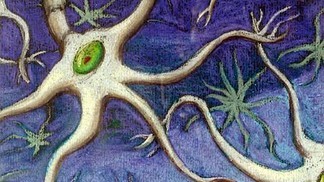
PARK9-associated ATP13A2 localizes to intracellular acidic vesicles and regulates cation homeostasis and neuronal integrity. Mutations in the ATP13A2 gene (PARK9, OMIM 610513) cause autosomal recessive, juvenile-onset Kufor-Rakeb syndrome and early-onset parkinsonism. ATP13A2 is an uncharacterized protein belonging to the P5-type ATPase subfamily that is predicted to regulate the membrane transport of cations. The physiological function of ATP13A2 in the mammalian brain is poorly understood. Here, the group of Darren Moore ( Laboratory of Molecular Neurodegenerative Research LMNR) demonstrate that in the human brain, ATP13A2 is localized to pyramidal neurons within the cerebral cortex and dopaminergic neurons of the substantia nigra. ATP13A2 protein levels are increased in nigral dopaminergic and cortical pyramidal neurons of Parkinson's disease brains compared with normal control brains. Using short hairpin RNA-mediated silencing or overexpression to explore the function of ATP13A2, they found that modulating the expression of ATP13A2 reduces the neurite outgrowth of cultured midbrain dopaminergic neurons.
TO READ THIS ARTICLE, CREATE YOUR ACCOUNT
And extend your reading, free of charge and with no commitment.
Your Benefits
- Access to all content
- Receive newsmails for news and jobs
- Post ads