Two HEPIA researchers have drawn up an inventory of plant species useful for the correction of the Rhône, in particular for the creation of dykes in the Chablais region. They present their findings at the "Rencontres de l’Eau".
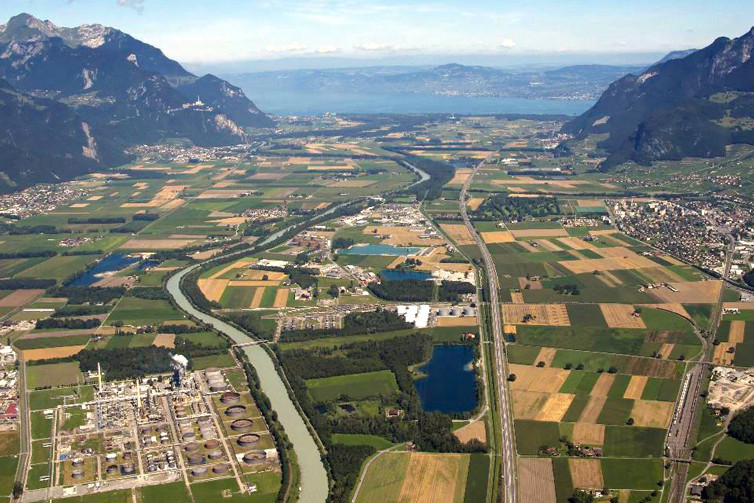
The Rhône threatens to overflow its banks. More than 1,300 hectares are currently threatened by flooding in the Chablais region. Potential damage is estimated at two billion Swiss francs. In May 2025, the Federal Council approved a financial credit for flood protection works in the Chablais region and at the mouth of the Rhône.
The priority objective is to protect the plain, its inhabitants and its infrastructure from flooding. The work will give more space to the Rhône, enabling the redevelopment of areas conducive to relaxation, soft mobility and biodiversity.
This work can be undertaken using plant-based engineering, as proposed by Pierre-André Frossard , associate professor at the Geneva School of Landscape, Engineering and Architecture (HEPIA). "Bioengineering aims to use the full potential of plants’ biotechnical and ecological traits. These ancestral techniques, rediscovered and adapted at the end of the 20th century, are used to stabilize embankments, revegetate degraded sites and restore natural environments. In Switzerland, however, its main application remains the development and management of watercourses."
In this context, the professor and Laurent Huber , HES scientific assistant, were commissioned by the Direction générale de l’environnement (DGE) of the Canton of Vaud to draw up an inventory of the region’s resources.
Their mission: to draw up a clear list of available wild plant material and potential collection sites in the Chablais area of Vaud - a major geographical constraint, since the area is already heavily developed and natural environments are relatively rare.
Another criterion was the need for motorized access to guarantee plant harvesting. "The final intention is to establish whether there is, at regional level, a sufficiently large volume of plant material of different species to enable the work, or whether we need to import some."
Local genetic heritage
Staying local not only offers economic advantages, but also a better response from the environment. "The genetic heritage of plants differs from region to region. By maintaining a geographical coherence with regional ecotypes, we improve the success of renaturation," explains Pierre-André Frossard.
In the field since summer 2025 with Luce Renevey and Martino Balestra, research assistants at the Institut Terre Nature et Paysage , the two specialists from the Écologie végétale appliquée à l’aménagement et la conservation (EVA) group have focused their investigations on four major categories of native plants.
Willows
These species are capable of vegetative reproduction and rapid growth. their ability to regenerate is astonishing," adds the professor. They can withstand heavy physical stress, while remaining flexible and resistant to current, which are considerable comparative advantages in plant engineering."
Helophytes
Helophytes, semi-aquatic plants such as sedges and rushes, can be harvested in clod form. They can be used to restore wetlands or integrated into structures to stabilize riverbanks.
Herbaceous plants
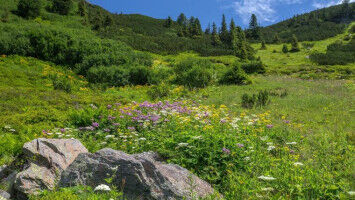
Seeds of herbaceous plants are collected from species-rich hay meadows, in order to reconstitute high-quality meadow environments of regional origin.
Forest shrubs and trees
Since harvesting from forests is forbidden by law, the aim here is to check the extent to which regional forest nurseries are able to supply quality material in sufficient quantities.
The areas to be redeveloped each measure over 30 hectares. "Given the scale of the project, it is likely that external nurseries will be required, at least for willows and other woody species", adds Laurent Huber.
The two researchers have also listed all the authorizations required, particularly in cases where the plant resources are located on private property. The work will start at the end of 2026 and continue in any case until 2030.
Laurent Huber and Pierre-André Frossard will present the results of their work at the "Rencontres de l’Eau" on Friday February 6, 2026. For its 14th edition, the event, co-organized in partnership with the Maison de la Rivière and the ColLaboratoire research-action unit of the University of Lausanne, will take place on the HEPIA Prairie site.