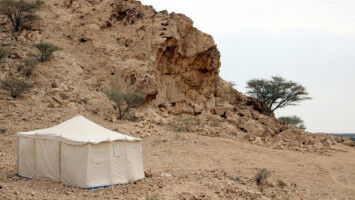
Shallow soda lakes show promise as cradles of life on Earth
Charles Darwin proposed that life could have emerged in a " warm little pond " with the right cocktail of chemicals and energy. A study from the University of Washington, published this month in Communications Earth & Environment, reports that a shallow "soda lake" in western Canada shows promise for matching those requirements. The findings provide new support that life could have emerged from lakes on the early Earth, roughly 4 billion years ago. Scientists have known that under the right conditions, the complex molecules of life can emerge spontaneously. As recently fictionalized in the blockbuster hit "Lessons in Chemistry," biological molecules can be coaxed to form from inorganic molecules. In fact, long after the real-life 1950s-era discovery made amino acids, the building blocks of proteins, more recent work has made the building blocks of RNA. But this next step requires extremely high phosphate concentrations.