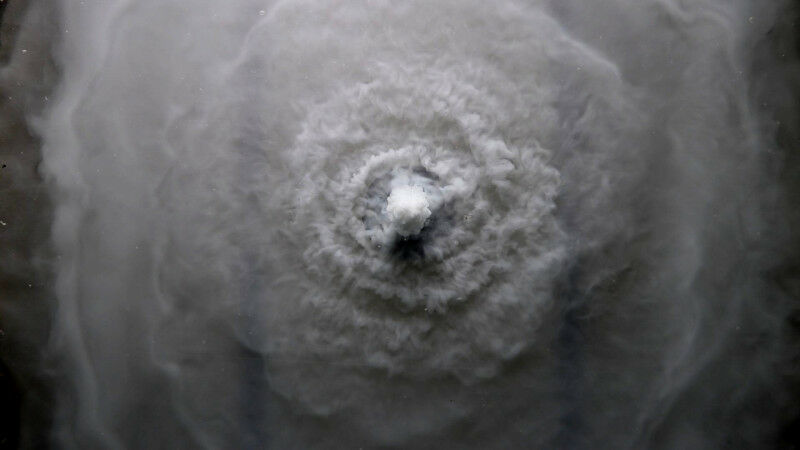
A top view of a lab experiment simulating a large submarine eruption. Credit: Johan Gilchrist, UBC
A top view of a lab experiment simulating a large submarine eruption. Credit: Johan Gilchrist, UBC Science, Health & Technology Alex Walls New research into volcanic eruptions could help predict their hazards, including tsunamis and surfing hot rock avalanches. Explosive research. Volcanic eruptions large enough to create a caldera, or cauldron-like hole, also create flows of volcanic ash and rock, and sometimes tsunamis. But we don't really understand their behaviour and these resulting hazards. Underwater explosive caldera-forming eruptions tend to form 'terraces' on the seafloor, an example being the 3,600-year-old Santorini caldera north of Crete in Greece. UBC researchers simulated these eruptions by injecting powerful jets of sand-water mixtures into, as well as through, layers of water.
TO READ THIS ARTICLE, CREATE YOUR ACCOUNT
And extend your reading, free of charge and with no commitment.