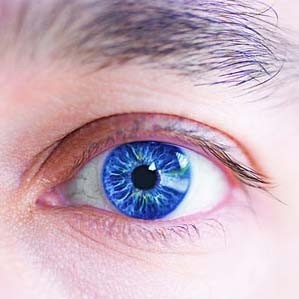
?My eye! my beautiful eye? by Fausto
Fernos on Flickr. Some rights reserved
UCL scientists are pioneering a stem cell treatment to replace diseased parts of the retina, which could lead to a future treatment for retinal diseases that affect around 3,000 children in the UK. The researchers from UCL Institute of Child Health and UCL Institute of Ophthalmology, also members of the UCL Centre for Stem Cells and Regenerative Medicine, successfully implanted cells from healthy mice into mice with an inherited form of childhood blindness called Leber Congenital Amaurosis (LCA). The implanted cells express a gene called Crx which is needed to make healthy cone and rod photoreceptors. The cells were able to integrate with the retina and become new cone photoreceptors. This is the first time this has been achieved. Further studies are needed to demonstrate whether it is possible to restore sight using this method. Dr Jane Sowden from the UCL Institute of Child Health, who led the study, said: 'We have shown for the first time that it is possible to transplant new cone photoreceptors into the mature retina.
TO READ THIS ARTICLE, CREATE YOUR ACCOUNT
And extend your reading, free of charge and with no commitment.