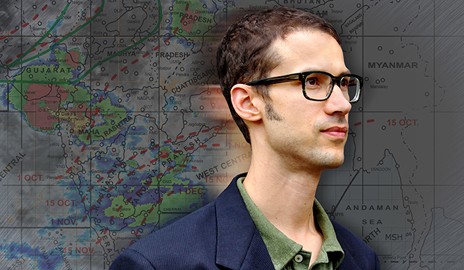
(Illustration by Michael S. Helfenbein)
Rain or shine, it's always monsoon season for William Boos. From his meteorological lair on Science Hill, Boos calmly monitors fluid dynamics and atmospheric depressions thousands of miles away. Volatile forces of nature in far-off places are his specialty. "In many parts of the world, people don't have access to the quality of weather forecasts we're used to in the U.S.," said Boos, as assistant professor in the Department of Geology and Geophysics, and the guiding force behind a new website, WorldMonsoons.com. "Those forecasts either aren't being done or they're not being disseminated in a fashion that can be appreciated by the average citizen." The consequences can be dramatic. Monsoons in the world's tropical latitudes are atmospheric circulations the size of continents, producing months-long periods of rain that wash away crops and endanger public safety. Advance notice of their arrival and duration has the potential to save lives and help farmers decide the best time for planting.
TO READ THIS ARTICLE, CREATE YOUR ACCOUNT
And extend your reading, free of charge and with no commitment.