Brunt Ice Shelf
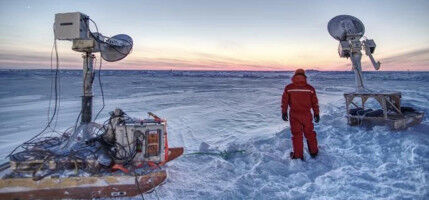
Brunt Ice Shelf A team of scientists from UCL, the University of Cambridge and the British Antarctic Survey (BAS) are studying the Brunt Ice Shelf in Antarctica to unravel the mysteries behind the calving processes that result in the formation of colossal icebergs. The floating Brunt Ice Shelf, home to the BAS Halley Research Station, has recently witnessed two significant calving events, including the spectacular A-81 iceberg, the size of Greater London, earlier this year. Calving is when chunks of ice break off at the terminus, or end, of a glacier. The team will collect shallow ice cores as well as deploying seismic instruments, radar and GPS receivers to delve into the evolution of cracks on the ice shelf. Ice samples will be taken for testing at the Rock and Ice Physics Laboratory at UCL Earth Sciences as well as the University of Cambridge. These tests will help the scientists to observe variations in the physical properties of the ice, including grain size, impurity content, seismic properties and fracture toughness. The collected data will contribute to a better understanding of the factors influencing crack growth and calving.
TO READ THIS ARTICLE, CREATE YOUR ACCOUNT
And extend your reading, free of charge and with no commitment.