Eruptions that shook the world Credit: Clive Oppenheimer
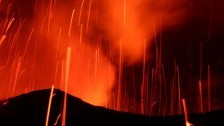
Imagine the perfect storm. A series of severe volcanic eruptions engulf the globe, spewing ash and sulphur into the atmosphere, causing widespread chaos on our intricate global economy, impacting our ability to grow food and grounding trans-continental air travel. We should consider a future "Laki"-style eruption as a particular threat to Europe, and draw up plans to reduce its potential impacts." - —Dr Clive Oppenheimer This fantastic scenario is the subject of Clive Oppenheimer's lecture Eruptions that shook the world on March 13 at this year's Cambridge Science Festival. The Festival is the UK's biggest free science festival and this year runs from March 12-25. In constructing this Hollywood-like disaster Oppenheimer, of the University of Cambridge's Geography Department, theorizes that Man's progress can be aided when faced with catastrophe. Three case-studies of severe volcanic activity are closely examined. The 1815 Mount Tambora eruption in Indonesia, the Laki eruption on Iceland in 1783, and the Toba catastrophe that occurred over 73,000 years ago are all events that caused significant fallout throughout the globe, impacting people's lives for years after the eruption.
TO READ THIS ARTICLE, CREATE YOUR ACCOUNT
And extend your reading, free of charge and with no commitment.