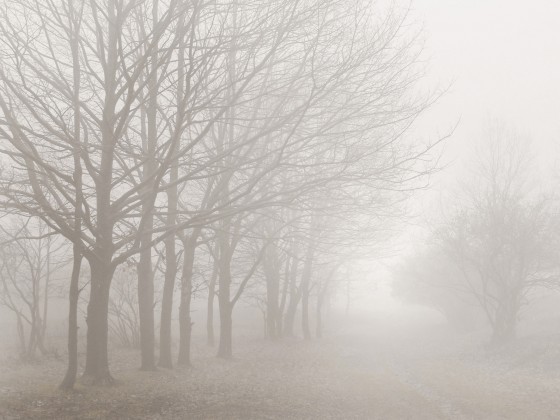
 Foggy scenery in autumn
© Colourbox.de
Foggy scenery in autumn
© Colourbox.de
Fog is formed through a fine distribution of water droplets in the air. It is an everyday meteorological phenomenon - but it is becoming ever rarer. At hundreds of weather stations worldwide experts have been observing a decrease in the occurrence, or the intensity, of fog. "As to the reasons for this, all we could do in the past was speculate," says Prof. Otto Klemm from Münster University. Klemm, a climatologist, and his colleague Prof. Neng-Huei Lin from Taiwan National Central University, have now jointly carried out investigations as to whether climate change - or lower levels of air pollution - might be the cause of the decline. In fact, their conclusion is that both of these could explain the decrease in fog. For special conditions relating to the physics of fog - i.e. a relative atmospheric humidity of just under 100 percent - the researchers demonstrated that a rise in temperature of 0.1 degrees Celsius can improve visibility by the same amount as a reduction in concentrations of air pollutants by ten percent.
TO READ THIS ARTICLE, CREATE YOUR ACCOUNT
And extend your reading, free of charge and with no commitment.
Your Benefits
- Access to all content
- Receive newsmails for news and jobs
- Post ads