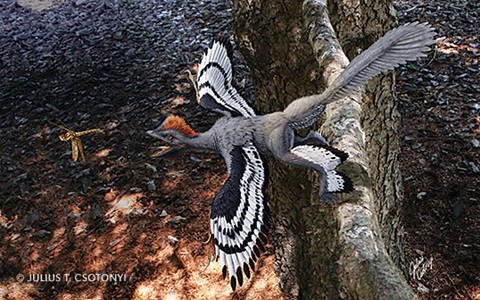
The colour patterns on the feathered dinosaur Anchiornis huxleyi (pictured above) are based on comparisons with the cellular structures of modern birds. UAlberta researcher Phil Currie helped identify the first dinosaur specimens that showed evidence of feathers. (Image: Julius Csotonyi)
UAlberta research is challenging basic assumptions about dinosaurs—and greatly expanding the number of known species. On an afternoon in May, drivers zip down Anthony Henday Drive in Edmonton and children race home from school, all unaware that, in a wooded creek bed just a few hundred metres away, University of Alberta paleontologists and about a dozen students are busy unearthing treasures buried nearly 73 million years ago. This site, just a few minutes' drive from campus and not far from the Century Park LRT station, is one of the university's best-kept secrets: a graveyard containing the remains of at least a dozen dinosaurs. Excavating the bones from the soft shale, the researchers use the same implements fossil hunters have wielded for more than 100 years—trowels, paint scrapers and dental picks—but they also have access to tools and techniques that are thoroughly modern. When a bone is uncovered, a student records its exact location with a handheld GPS tracking system, similar to the ones used in cars. Each night the data are uploaded to a computer, creating a three-dimensional map of the bonebed. Later, back in the lab, some of the bones will be examined with CT scanners and electron microscopes to extract from these old bones every possible bit of information about how the dinosaurs lived and, ultimately, how they died.
TO READ THIS ARTICLE, CREATE YOUR ACCOUNT
And extend your reading, free of charge and with no commitment.