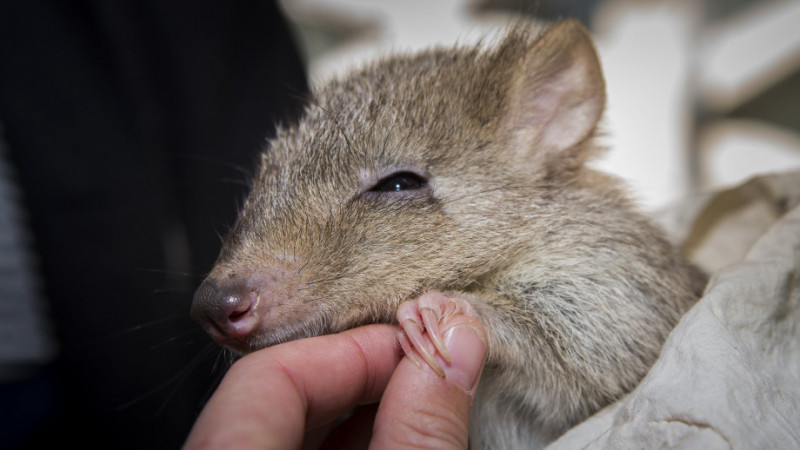
A bettong held by an outreach officer. Image: ANU
A bettong held by an outreach officer. Image: ANU - A new study led by The Australian National University (ANU) has found that animals may be an "untapped" resource to help manage fuel loads for bushfires. Lead author Dr Claire Foster said Australia's recent summer has shown that wildlife can be severely impacted by bushfires, but the report found that animals can also influence bushfires in surprising ways. "Large grazing animals - including cows, kangaroos and rhinos - eat large amounts of grass, and by doing so can reduce the size and spread of grassland fires," said Dr Foster from the ANU Fenner School of Environment and Society. "In other environments, the activities of smaller animals, such as a mallefowl building nests, bettongs digging for food or even insects eating fallen leaves can also have important effects on the fuel that bushfires burn. "Conserving and restoring populations of these animals might have two benefits - the conservation of the species themselves, and keeping fuel amounts low in the forests and woodlands they live in." - - Dr Foster said events like the most recent bushfire season and the COVID-19 pandemic could reduce animals' positive contribution to reducing fuel loads. "If populations of these animals don't recover from events like this summer's widespread bushfires, that could have long-term consequences for future fire risk," she said. "One thing I am concerned about at the moment is the impact of the COVID-19 crisis on conservation and monitoring efforts in Australia.
TO READ THIS ARTICLE, CREATE YOUR ACCOUNT
And extend your reading, free of charge and with no commitment.