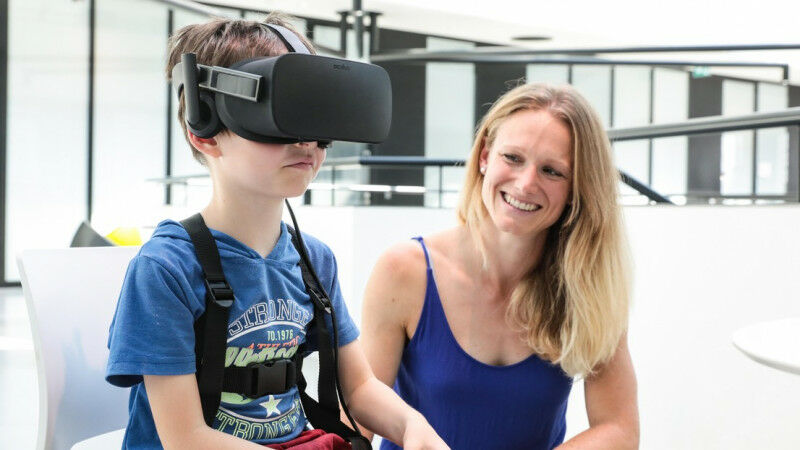
 © 2021 EPFL / Alain Herzog. Jenifer Miehlbradt with a 6 year-old boy trying out virtual reality.
© 2021 EPFL / Alain Herzog. Jenifer Miehlbradt with a 6 year-old boy trying out virtual reality. Immersive virtual reality disrupts the child's default coordination strategy, scientists show, something that should be taken into account when developing virtual reality rehabilitation protocols for children. While very little is known on the effects of immersive VR on adults, there is next to no knowledge on the impact of such systems on the sensorimotor abilities of young children. In 2016 at EPFL's Open House , EPFL graduate Jenifer Miehlbradt was showcasing her virtual reality setup to allow users to pilot drones using their torso. Users from the general public were invited to wear a VR headset, and movements of their torso would allow them to navigate through a series of obstacles in a virtual landscape. "Adults had no problem using simple torso movements to fly through the virtual obstacles, but I noticed that children just couldn't do it," remembers Miehlbradt.
TO READ THIS ARTICLE, CREATE YOUR ACCOUNT
And extend your reading, free of charge and with no commitment.
Your Benefits
- Access to all content
- Receive newsmails for news and jobs
- Post ads