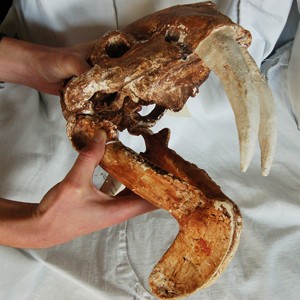
Although superficially imilar to the placental sabretoothed cats, like Smilodon fatalis, the
extinct sabretoothed marsupial, Thylacosmilus atrox, shown here, is the
only mammalian carnivore to have evolved ever-growing canines, making it one of
the most formidable predators known in mammalian history. Image (c) UCL, Grant Museum of Zoology
Marsupial carnivores, including bizarre pouched lions, wolves, and sabretooths, were once as diverse in their appearance as their placental counterparts are today, according to new research. Millions of years ago large marsupial carnivores dominated both Australasia and South America. Today, the Tasmanian Devil is the largest marsupial carnivore left, and is on the brink of extinction. Why these large pouched predators have dwindled is a mystery, but one explanation is that they couldn?t compete with their placental counterparts, like ordinary lions and tigers, because of the constraints of marsupial development. Now, by looking at the skulls of living and fossil marsupial and placental carnivores from around the world, scientists have shown that the diversity between species in marsupial carnivores was in fact slightly greater than it is in more familiar placental carnivores, even though there were fewer species overall. The research is published today in the Proceedings of the Royal Society B. Animals as strange as the sabretooth marsupial with its huge ever-growing canine teeth once ruled South America. Marsupial lions were also common in Australia, along with marsupial wolves - the last of which died a mere 75 years ago.
TO READ THIS ARTICLE, CREATE YOUR ACCOUNT
And extend your reading, free of charge and with no commitment.