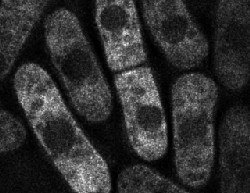
Cells sentenced to death. Cells are dying when zinc cannot bind to Dicer and the protein therefore stays in the cytoplasm
Scientists have discovered a potential new approach for inhibiting the growth of pathogenic fungi. Ultimately, immunocompromised patients with fungal infections, in particular, could benefit from this work. As temperatures soar and more and more people cool off at outdoor pools, the incidence of so called swimmer's ear - an infection of the ear canal - also rises. One of the agents causing this condition is a fungus of the Aspergillus genus. But while swimmer's ear (otomycosis) can be readily treated, other mycoses may be fatal - especially in patients with an impaired immune system. In such cases, it is obviously vital to understand how fungal growth can be inhibited or even arrested. A group of scientists have now identified a mechanism which, if blocked, should lead to marked inhibition of the growth of pathogenic fungi.
TO READ THIS ARTICLE, CREATE YOUR ACCOUNT
And extend your reading, free of charge and with no commitment.