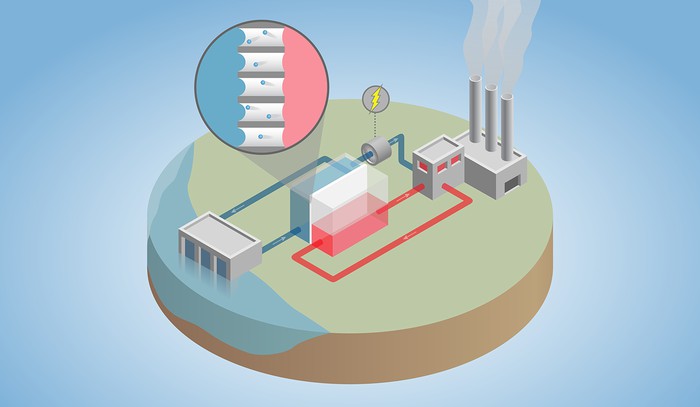
The temperature difference between a waste heat source and the environment drives water across the nanobubble membrane (enlarged) and through a turbine to generate electricity.
Researchers at Yale have developed a new technology that could make energy from the low-temperature wasted heat produced by industrial sources and power plants, tapping into a widely available - and mostly unused - resource. It is estimated that recoverable waste heat in the U.S. alone could power tens of millions of homes. Although existing technologies can reuse high-temperature heat or convert it to electricity, it is difficult to efficiently extract energy from low-temperature heat waste due to the small temperature difference between the plant's heat discharge and the surrounding environment. Additionally, conventional systems are designed to target a specific temperature difference, so they're less effective when there are fluctuations in the output of waste heat. Researchers at Yale's Department of Chemical and Environmental Engineering have developed a new technology that overcomes these challenges. The key is a "nanobubble membrane" that traps tiny air bubbles within its pores when immersed in water. Heating one side of the membrane causes water to evaporate, travel across the air gap, and condense on the opposite side of the membrane.
TO READ THIS ARTICLE, CREATE YOUR ACCOUNT
And extend your reading, free of charge and with no commitment.