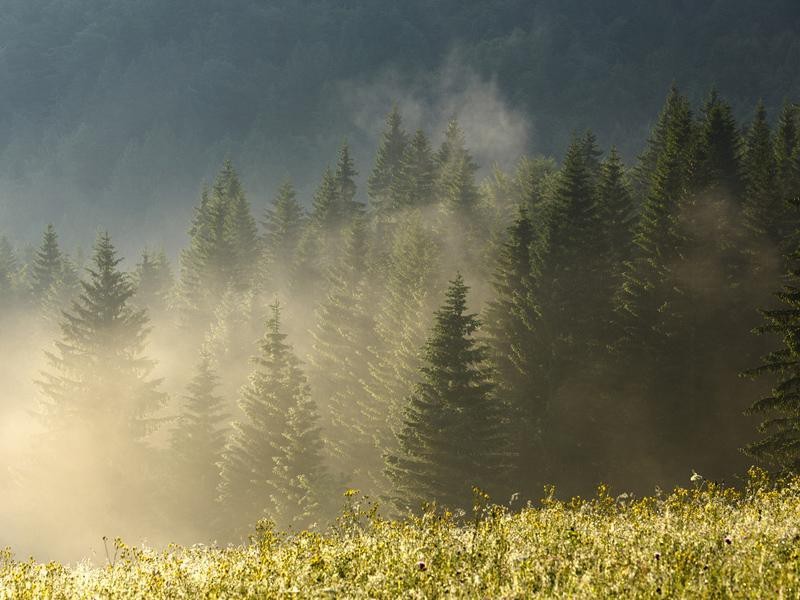
How do trees adjust to the effects of global warming? EPFL researchers have studied how beech and spruce trees - two of the most common plant species in Europe - react to changing temperatures. And they discovered that the amount of moisture in the air plays a decisive role. Rising temperatures, increasingly intense rainfall and extended periods of drought are some of the known effects of climate change. But how are trees reacting to them? To find out, a team of researchers from EPFL and the Swiss Federal Institute for Forest, Snow and Landscape Research (WSL) studied two of the most common plant species found in Switzerland and the rest of Europe: beech and spruce trees. The study,* which was recently published in Global Change Biology , revealed that each species reacts differently, with the amount of moisture in the air playing a greater role than was previously thought. "To find out what forests may look like in the future, we have to understand how each plant species will respond to climate change," explains Constant Signarbieux, the scientist in charge of the study, which was carried out at EPFL's Ecological Systems Laboratory (ECOS). The researchers observed five-to-seven-year-old saplings of the two species for four years, from 2012 to 2015.
TO READ THIS ARTICLE, CREATE YOUR ACCOUNT
And extend your reading, free of charge and with no commitment.
Your Benefits
- Access to all content
- Receive newsmails for news and jobs
- Post ads