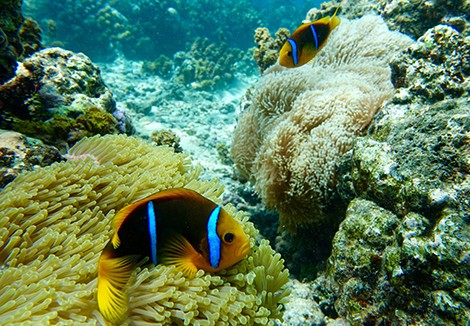
 © Suzanne C. Mills Clownfish and anemones in the reefs around Moorea Island.
The golden color of the anemones is due to the microalgae present in their tentacles.
During high temperature episodes, the microalgae living in symbiosis with the corals are expulsed, which causes the corals to bleach.
© Suzanne C. Mills Clownfish and anemones in the reefs around Moorea Island.
The golden color of the anemones is due to the microalgae present in their tentacles.
During high temperature episodes, the microalgae living in symbiosis with the corals are expulsed, which causes the corals to bleach.
The bleaching of corals is a well-known consequence of climate change. What is less widely known is that sea anemones suffer the same fate, and this reduces the fertility of the clownfish living in these anemones, as researchers from the Centre de recherches insulaires et observatoire de l'environnement (CRIOBE, a laboratory jointly managed by the CNRS, the EPHE and Université de Perpignan Via Domitia) have just demonstrated in French Polynesia. Following a 14-month study, they are publishing their results on October 10, 2017. Like corals, sea anemones are animals that live in symbiosis with microscopic algae, which gives them their color, as well as with certain species of fish. Clownfish protect themselves from predators by sheltering among the anemones' tentacles, and each month lay eggs at their base. Equally, the anemones are also protected by the clownfish that they host. Every other day, from October 2015 to December 2016, researchers and students visited thirteen pairs of clownfish and their host anemones in the coral reefs of Moorea Island (French Polynesia).
TO READ THIS ARTICLE, CREATE YOUR ACCOUNT
And extend your reading, free of charge and with no commitment.
Your Benefits
- Access to all content
- Receive newsmails for news and jobs
- Post ads