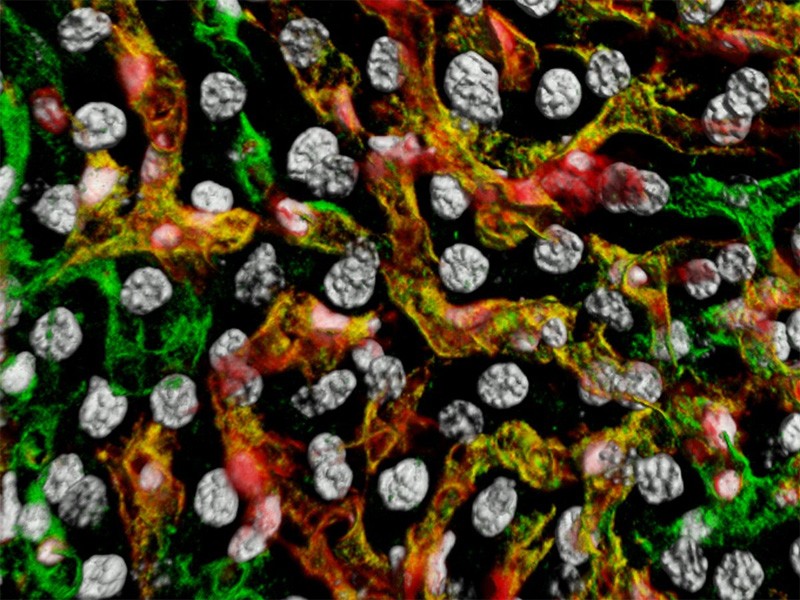
Primitive
stem cells in the embryonic blood contribute cells to the inner lining of blood
vessels. In this image of foetal liver, the blood vessel lining that originates
from blood stem cells is shown in red, whereas pre-existing blood vessel lining
is shown in green. The nuclei of all liver cells are shown in white. Image
courtesy of Dr Alessandro Fantin, Ruhrberg lab.
A unique source of stem cells in blood helps to build blood vessels according to new UCL-led research with mouse embryos. The findings change scientific understanding of how blood vessels are made and bring scientists one step closer to using stem cells to grow new blood vessels and repair damaged ones. Growing and repairing blood vessels is a major goal in treating heart and circulatory diseases in which vessels become damaged, including, for example, coronary heart disease and peripheral arterial disease or some blinding eye diseases. Until now, scientists thought that new blood vessels in the embryo only grew when existing blood vessel cells divided. The new research shows that stem cells in the bloodstream can develop into endothelial cells - important cells which line all blood vessels. "These stem cells were previously known to form blood and immune system cells in the foetus. To find that they also generate endothelial cells for new blood vessels in the foetus was unexpected and is hugely exciting," said lead author Professor Christiana Ruhrberg (UCL Institute of Ophthalmology).
TO READ THIS ARTICLE, CREATE YOUR ACCOUNT
And extend your reading, free of charge and with no commitment.