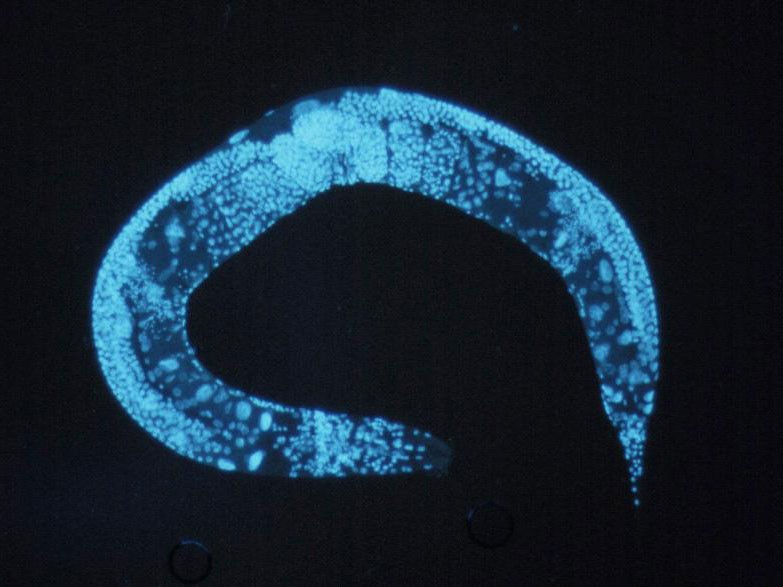
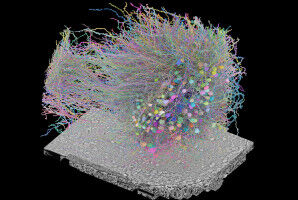
Caenorhabditis elegans (credit: Wikimedia Commons )
Ageing in worms mainly results from the direct action of genes and not from random wear and tear or loss of function, and the same is likely to be true in humans, according to research by UCL, Lancaster University and Queen Mary University of London scientists. The study, published in Current Biology and funded by Wellcome, shows that normal biological processes which are useful early on in life, continue to 'run-on' pointlessly in later life causing age-related diseases. The deteriorative part of ageing, called 'senescence', is the main cause of disease and death worldwide as it leads to dementia, cancer, cardiovascular disease and chronic obstructive pulmonary disease, but scientists have struggled to identify what causes it. To address this, researchers have focused on discovering the basic principles of ageing by studying simple animals such as Caenorhabditis elegans , a nematode worm used in this study which lives on fruit, and dies of old age after only 2-3 weeks. "Discovering the causes of ageing in these little creatures could provide the key to understanding human ageing, and where late-life diseases come from," said Professor David Gems (UCL Institute of Healthy Ageing), corresponding author who led the team. "I've been studying ageing in C. elegans for 25 years, and it's amazing to see its underlying mechanisms revealed. It is so important, because if you want to treat a disease you really need to understand what causes it.
TO READ THIS ARTICLE, CREATE YOUR ACCOUNT
And extend your reading, free of charge and with no commitment.