Taylor Puts New Twist on Measuring Stress in Materials
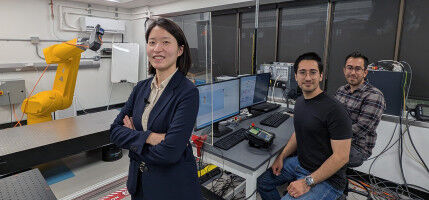
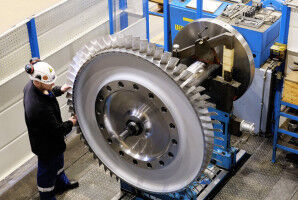
The U.S. Air Force has awarded Assistant Professor of Mechanical Engineering Rebecca Taylor funding to develop "nanosprings" that could stick to soft materials or be sprayed onto metals to estimate the mechanical stress a piece of machinery endures. The nanosprings would allow mechanics and engineers to monitor the integrity and function of mechanical equipment, such as struts or aircraft components. "It's important with mechanical components to see what's happening in real-time," said Taylor, who holds a courtesy appointment in the Department of Biomedical Engineering. "DNA nanosprings, when in soft materials or sprays, don't require dangerous chemicals to give extremely sensitive strain readouts. Thinking of nanosprings this way gives ideas about what the next generation of sensors could be." Taylor's research focuses on building nanostructures to measure the strain on a material under force. These nanostructures are composed of DNA helices formed into tubular structures, which are shortened in selected regions to create a twisted, spring-like structure. The "nanosprings" are decorated with fluorescent chemicals such that, when twisted, the nanosprings emit different colors of light depending on their displacement.