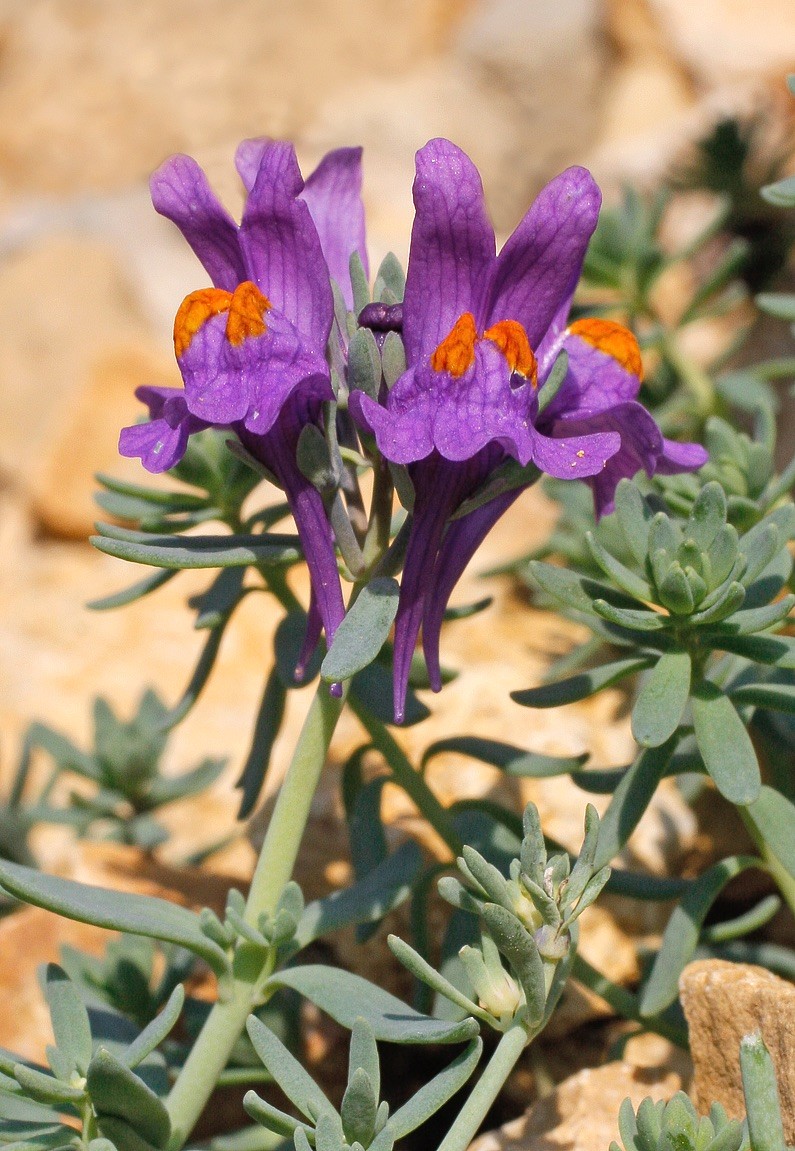
 Linaria alpina subsp. petraea. This endangered species is mainly found in the Swiss Jura and is on the «Red List» of Switzerland.
Rare plant species suffer more from disease than commoner species. The fact that rare species are more susceptible to attack by micro-organisms living in the soil, such as fungi and bacteria, may in fact be one of the reasons they are rare. Biologists have been trying to work out why some species are rare, while others are common, since Darwin's time and a new study from researchers at the University of Bern provides a possible answer. It has long been assumed that species are common because they can cope with a wide range of environmental conditions. Common species would therefore have a wide tolerance for different climates or soils and would be able to grow in many places, while rare species would only be able to grow under special conditions and in a few places. However, the way in which plants interact with other organisms, such as those in the soil, could also explain rarity, although few researchers have looked at this. Scientists at the University of Bern have now shown that rare species, which occur in just a few places, are much more strongly harmed by soil organisms than common species.
TO READ THIS ARTICLE, CREATE YOUR ACCOUNT
And extend your reading, free of charge and with no commitment.
Your Benefits
- Access to all content
- Receive newsmails for news and jobs
- Post ads