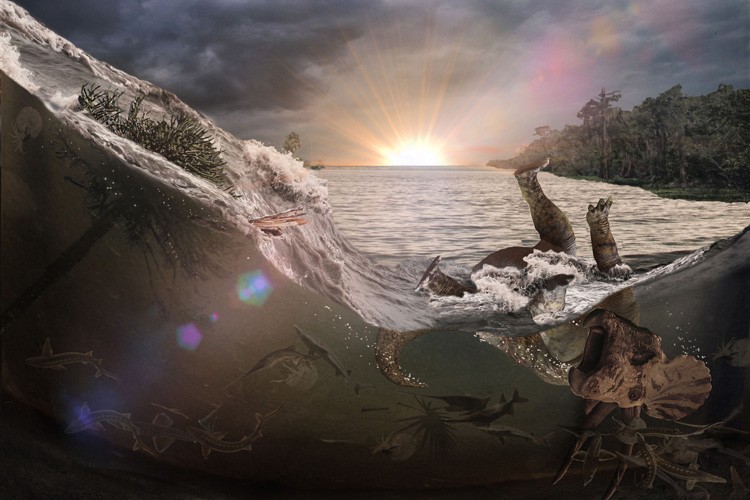
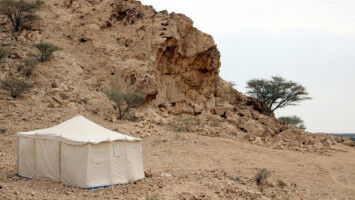
A meteor impact 66 million years ago generated a tsunami-like wave in an inland sea that killed and buried fish, mammals, insects and a dinosaur, the first victims of Earth’s last mass extinction event. The death scene from within an hour of the impact has been excavated at an unprecedented fossil site in North Dakota. (Graphics and photos courtesy of Robert DePalma)
The beginning of the end started with violent shaking that raised giant waves in the waters of an inland sea in what is now North Dakota. Then, tiny glass beads began to fall like birdshot from the heavens. The rain of glass was so heavy it may have set fire to much of the vegetation on land. In the water, fish struggled to breathe as the beads clogged their gills. The heaving sea turned into a 30-foot wall of water when it reached the mouth of a river, tossing hundreds, if not thousands, of fresh-water fish - sturgeon and paddlefish - onto a sand bar and temporarily reversing the flow of the river. Stranded by the receding water, the fish were pelted by glass beads up to 5 millimeters in diameter, some burying themselves inches deep in the mud. The torrent of rocks, like fine sand, and small glass beads continued for another 10 to 20 minutes before a second large wave inundated the shore and covered the fish with gravel, sand and fine sediment, sealing them from the world for 66 million years.
TO READ THIS ARTICLE, CREATE YOUR ACCOUNT
And extend your reading, free of charge and with no commitment.