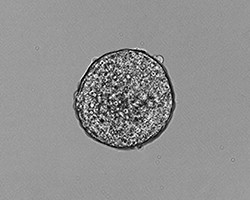
A growing mouse embryonic stem cell colony
The protein TRIM71 is an important regulator of animal development and plays a role in various diseases. In close collaboration, scientists from the groups of Helge Grosshans and Marc Bühler at the FMI elucidated the mechanism by which TRIM71 binds and turns off its RNA targets. They also identified several core targets of TRIM71, including proteins involved in genetic disorders. TRIM71 controls stem cell fate by promoting self-renewal while preventing differentiation. Unsurprisingly, the protein is involved in various diseases: Inappropriately high levels have been linked to cancer, whereas specific mutations in TRIM71 contribute to a developmental human brain defect known as congenital hydrocephalus. How TRIM71 controls normal development and contributes to disease has been poorly understood. However, hints came from research on the model organism C. elegans , a small worm where TRIM71 is called LIN-41: Researchers from the FMI previously found that this protein acted as an RNA-binding protein.
TO READ THIS ARTICLE, CREATE YOUR ACCOUNT
And extend your reading, free of charge and with no commitment.