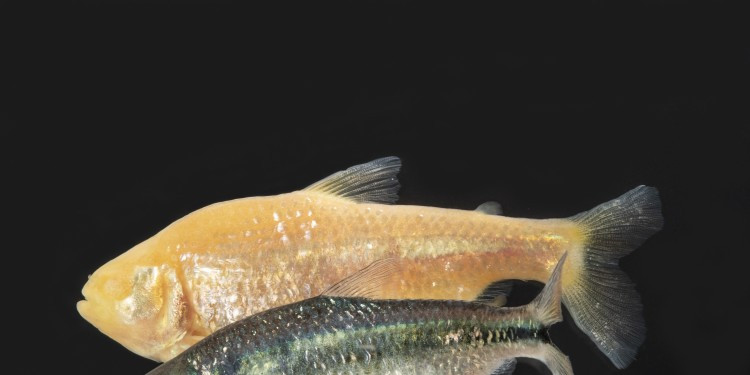
 Cave and surface forms of the same fish species, Astyanax mexicanus
Cave and surface forms of the same fish species, Astyanax mexicanus © Stowers Institute for Medical Research Adaptation of cavefish to low-parasite environment may provide autoimmune disease insight / Study published in "Nature Ecology & Evolution" Cavefish are small, live in tucked away places humans rarely go, and they're common enough that you can find them on every continent except Antarctica. But they also have another characteristic that seems surprising at first glance: They can tell researchers something about the occurrence of autoimmune diseases in humans. Because similar to people, cavefish live in an environment with a reduced number of parasites. Unlike people, however, cavefish have had much more time - about 150,000 years - to adapt to these conditions. To learn more about how a low-parasite environment may shape the evolution of a host's immune system, an international team of researchers led by the Stowers Institute for Medical Research examined the impact of decreased parasite abundance and infection on the evolution of the cavefish immune system. The scientists under participation of Dr. Jörn P. Scharsack from the Univerity of Münster characterized the cavefish immune system and how it responds to threats, compared to that of closely-related river fish from a parasite-rich environment. Their findings show that cavefish differ in their sensitivity toward immune stimulants and have a different composition of immune cells, including a reduction of cells of the innate immune system that play a role in inflammation.
TO READ THIS ARTICLE, CREATE YOUR ACCOUNT
And extend your reading, free of charge and with no commitment.
Your Benefits
- Access to all content
- Receive newsmails for news and jobs
- Post ads