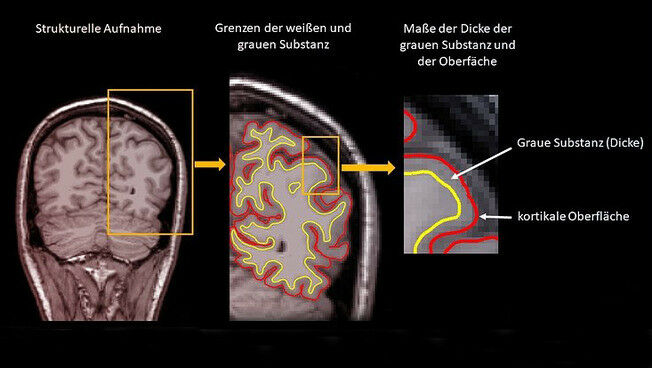
Photo: UHH MR images of a brain
Photo: UHH MR images of a brain - Changes in the brain caused by early childhood experiences are not entirely irreversible. This is the conclusion reached in a recent study by researchers at Universität Hamburg, led by the psychologist and neuroscientist Brigitte Röder. Earlier neuroscientific studies have revealed that unfavorable experiences in the first few months and years of life, for example blindness or poverty, can adversely affect the structural development of the human brain. Until now, however, it was not clear whether brain structure can heal if the causes of impairment are eliminated. New findings, now published in the journal Cerebral Cortex , show that, at least with regard to the development of those parts of the brain responsible for vision, changes in brain structure persist long-term. 3D models of the brain. For the study, a research team in biological psychology and neuropsychology collaborated with the LV Prasad Eye Institute in Hyderabad, India to study people who were in some cases blind for many years after birth due to cataracts in both eyes and to whom operations successfully restored sight.
TO READ THIS ARTICLE, CREATE YOUR ACCOUNT
And extend your reading, free of charge and with no commitment.