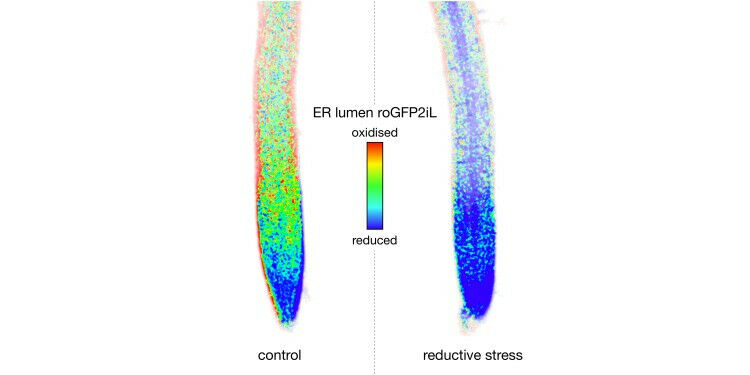
 The figure shows two root tips of thale cress, Arabidopsis thaliana, which was used as a model plant in the study. The cells contain a biosensor (roGFP2iL) in the endoplasmic reticulum (ER) which reads the ambient redox status and indicates reductive stress in the right-hand root.
The figure shows two root tips of thale cress, Arabidopsis thaliana, which was used as a model plant in the study. The cells contain a biosensor (roGFP2iL) in the endoplasmic reticulum (ER) which reads the ambient redox status and indicates reductive stress in the right-hand root. Markus Schwarzländer, Philippe Fuchs According to a team of researchers at the University of Münster, mitochondria provide unexpected help for cells in a crisis by respiring away harmful substances. A current study produced by the Institute of Biology and Biotechnology of Plants (IBBP) shows three things: that this mechanism can be triggered by reductive stress, that it protects the folding of certain proteins destined for export, and that the cell's "powerhouse" consequently acts even more flexibly than was previously known. "The main job that mitochondria have," explains Prof. Markus Schwarzländer from the IBBP, "is to act as hubs of metabolism. What is surprising now is that evidently they are also able to take care of an excess of specific compounds, so-called thiols, which could otherwise lead to damage at other places in the cell." To support this a special crisis programme is triggered, the 'ANAC017 signalling pathway'. "The 'alternative oxidase' protein then ensures there is a higher respiratory capacity in the mitochondria in plants," says Schwarzländer.
TO READ THIS ARTICLE, CREATE YOUR ACCOUNT
And extend your reading, free of charge and with no commitment.
Your Benefits
- Access to all content
- Receive newsmails for news and jobs
- Post ads