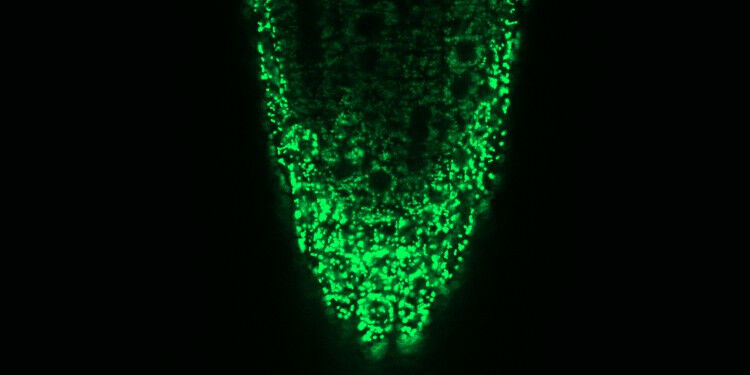
 Microscopic image of the mitochondria in a root tip of Arabidopsis thaliana. The interior of the mitochondria (matrix) is marked by a fluorescent protein.
Microscopic image of the mitochondria in a root tip of Arabidopsis thaliana. The interior of the mitochondria (matrix) is marked by a fluorescent protein. AG Plant Energy Biology - Jan-Ole Niemeier Calcium is a very special nutrient. In the cells of most living beings calcium ions function as so-called second messengers to transmit important signals. The same applies equally to animal, plant and fungal cells. Through collaboration of several research institutes at a national and international level members of the "Plant Energy Biology" working group at Münster University, led by Prof. Markus Schwarzländer, and of the team led by Prof. Alex Costa at the University of Milan, have now identified the molecular machinery which enables calcium ions to be taken up into the mitochondria of plant cells - and that this form of transport plays an important role in their response to being touched. The study has now been published in the journal "The Plant Cell".
TO READ THIS ARTICLE, CREATE YOUR ACCOUNT
And extend your reading, free of charge and with no commitment.
Your Benefits
- Access to all content
- Receive newsmails for news and jobs
- Post ads