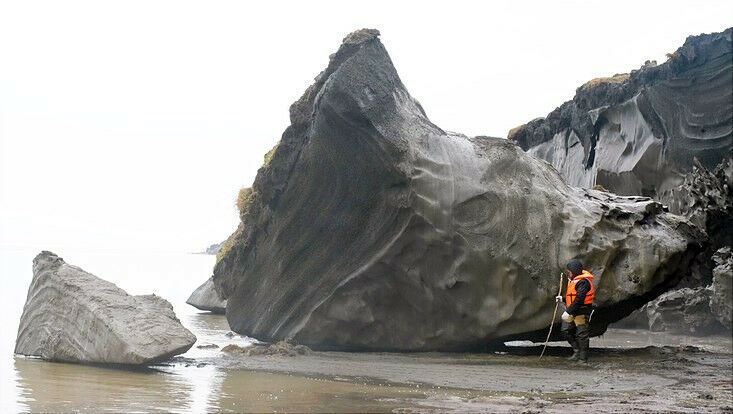
Photo: AWI/P.Overduin If global greenhouse gas emissions continue unabated, the erosion rate on Arctic coasts could more than double by the year 2100. On average, it would then amount to up to three meters per year - in the entire Arctic.
Photo: AWI/P.Overduin If global greenhouse gas emissions continue unabated, the erosion rate on Arctic coasts could more than double by the year 2100. On average, it would then amount to up to three meters per year - in the entire Arctic. Global warming is causing permafrost in the Arctic to thaw and sea ice to melt. As a result, coasts are less protected and are being eroded, while carbon stored in the soil and carbon dioxide are being released into the ocean and atmosphere. In a first, researchers at Universität Hamburg have now calculated the future scale of these processes for the entire Arctic. Their conclusion: each degree of warming accelerates them considerably. Their findings have now been published Climate Change.
TO READ THIS ARTICLE, CREATE YOUR ACCOUNT
And extend your reading, free of charge and with no commitment.