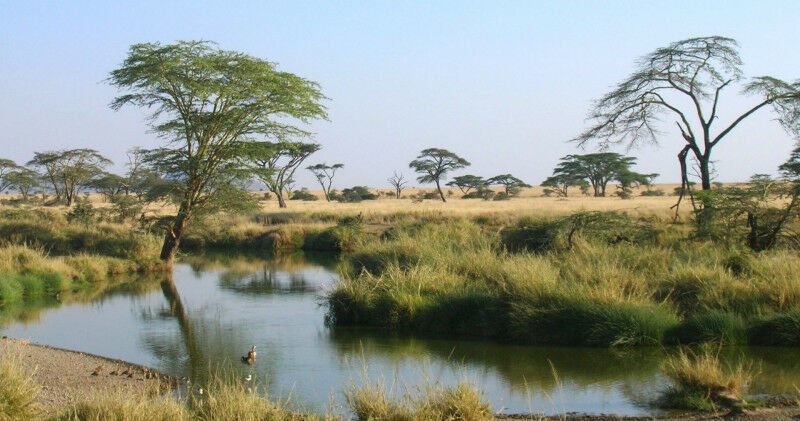
Serengeti National Park in northern Tanzania represents a typical semi-arid, dryland ecosystem. (Lucy Witter)
Serengeti National Park in northern Tanzania represents a typical semi-arid, dryland ecosystem. (Lucy Witter) - Drylands are experiencing increasingly levels of degradation and desertification, changes that could put already vulnerable populations at greater risk. A research team, including Natasha MacBean , conducted an examination of dryland productivity and its important role in global carbon and water cycling, to understand the impact of climate change and human activity on future dryland ecosystem functioning. Their paper, Dryland productivity under a changing climate , was published in Nature Climate Change . Natasha MacBean Drylands - those regions where precipitation is substantially smaller than atmospheric water demand - are the largest biome on earth, covering around 40 per cent of the world's terrestrial surface. Drylands currently host more than 2 billion people, the vast majority of which live in developing countries. These regions are often more agriculturally productive than tropics or boreal forests and have acted as breadbaskets for millennia.
TO READ THIS ARTICLE, CREATE YOUR ACCOUNT
And extend your reading, free of charge and with no commitment.