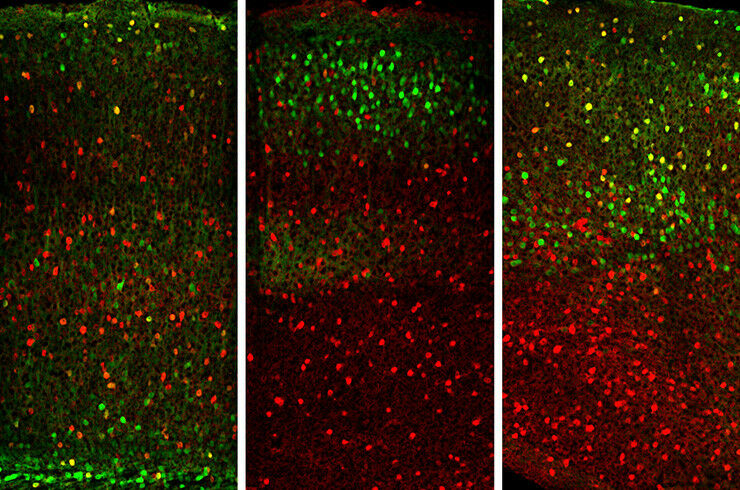
FMI researchers mapped specific populations of neurons (green) that turn on in the brain’s outer layer when mice experience a mismatch between expectations and reality. Inhibitory neurons are shown in red. Image credits: Sean O’Toole/FMI.
FMI researchers mapped specific populations of neurons ( green ) that turn on in the brain's outer layer when mice experience a mismatch between expectations and reality. Inhibitory neurons are shown in red. Image credits: Sean O'Toole/FMI. When our expectations differ from reality, specific sets of brain cells are activated. Working in mice, FMI researchers have characterized these neurons based on their gene-expression patterns, paving the way for a better understanding of some of the neuronal deficits associated with neuropsychiatric conditions. Anyone who has ever opened a Danish butter cookie tin only to find a sewing kit knows it: we often face a mismatch between our expectations and reality. When this happens, specific sets of neurons located in the cortex — the brain's outer layer — turn on.
TO READ THIS ARTICLE, CREATE YOUR ACCOUNT
And extend your reading, free of charge and with no commitment.