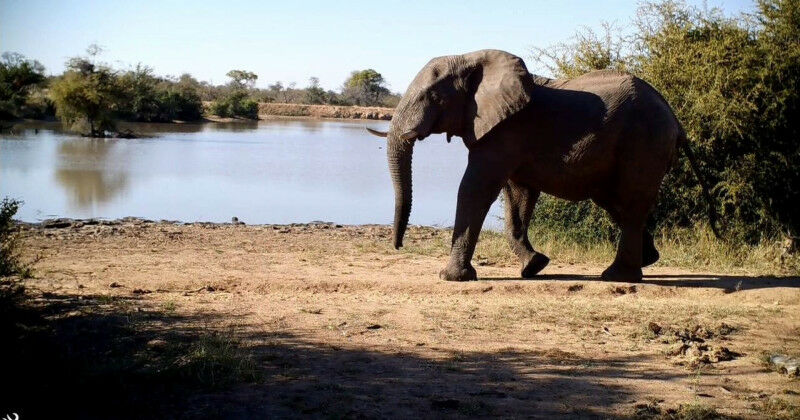
Footage recorded by automated behavioural response system documents the behaviour of mammals in response to human voices. (Liana Zanette image)
Footage recorded by automated behavioural response system documents the behaviour of mammals in response to human voices. (Liana Zanette image) New study: Fear of human "super predator" pervades South African savanna Elephants, rhinos, giraffes and other wildlife dread people far more than lions Lions have long been considered the world's most fearsome predator, the "king of beasts," but according to a new study, fear of humans far exceeds that of lions in elephants, rhinos, giraffes and every other mammal across the African savanna. Liana Zanette with an automated behavioural response system. (Michael Clinchy photo) This discovery greatly strengthens growing evidence from experiments on wildlife worldwide showing fear of the human "super predator" pervades the planet. The new findings by Western University biology professor Liana Zanette , in collaboration with one of the world's leading lion experts, Craig Packer from the University of Minnesota , and others, were published today in Current Biology . Working in one of the world's premier protected areas, South Africa's Greater Kruger National Park, Zanette and her colleagues experimentally demonstrated that local wildlife were twice as likely to run, and abandoned waterholes in 40 per cent faster time, in response to hearing human voices compared to hearing lions or hunting sounds (dogs barking or gunshots). Near 95 per cent (94.7) of species ran more or abandoned waterholes faster in response to humans than to lions, with giraffes, leopards, hyenas, zebras, kudu, warthog and impala all running significantly more from the sound of human voices than the sound of lions, and elephants and rhinos abandoning waterholes significantly faster upon hearing humans than hearing lions.
TO READ THIS ARTICLE, CREATE YOUR ACCOUNT
And extend your reading, free of charge and with no commitment.