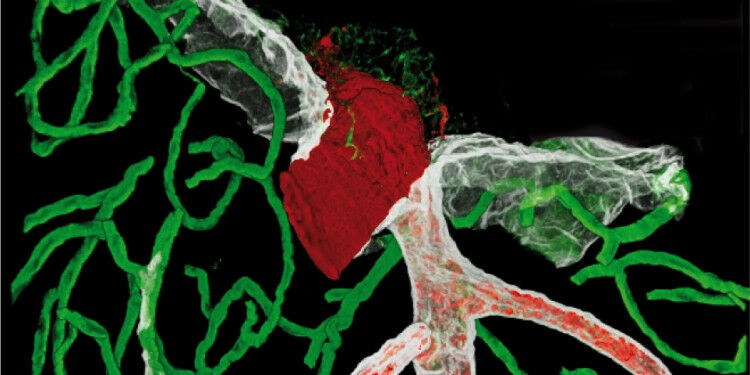
 Using specialised extracellular matrix molecules (white and green) and cellular markers (red), barriers at the surface of the brain and surrounding blood vessels can be visualised.
Team of researchers to investigate functions of blood-brain barriers. Using specialised extracellular matrix molecules (white and green) and cellular markers ( red ), barriers at the surface of the brain and surrounding blood vessels can be visualised. AG Sorokin According to the Robert Koch Institute, strokes are among the most frequent causes of death in Germany, along with heart diseases and cancer, and they are the most frequent cause of permanent disability in adults. Every year in Germany, around 200,000 people suffer a stroke. A new research project headed by biochemist Prof. Lydia Sorokin from the University of Münster will investigate functions of different barriers in the brain and how they are altered in stroke. The project investigates not only the blood-brain barrier that separates the blood circulation from the central nervous system, but other barriers at the surface of the brain and between the cerebrospinal fluid and the brain. The project - entitled "DeCoDis - Deciphering Cellular and Acellular Barrier Dysfunction in Cerebrovascular Diseases" starts in July and will receive 850,000 euros in financial support for three years from the German Ministry of Education and Research as part of the EU network "ERA-NET NEURON".
TO READ THIS ARTICLE, CREATE YOUR ACCOUNT
And extend your reading, free of charge and with no commitment.
Your Benefits
- Access to all content
- Receive newsmails for news and jobs
- Post ads