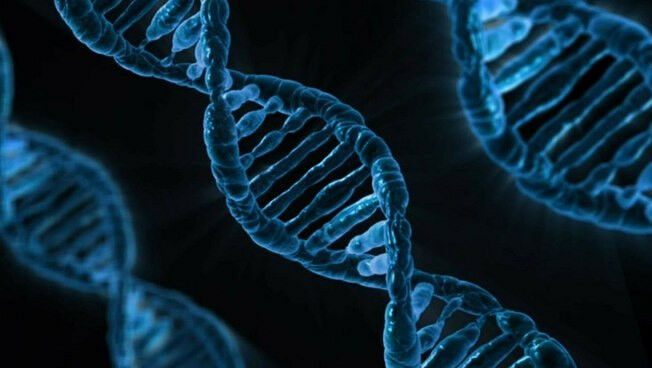
Photo: Pixabay Symbolic image of DNA
Photo: Pixabay Symbolic image of DNA - An international research team headed by Zoya Ignatova from Universität Hamburg has developed an innovative strategy for using artificially construed transfer RNA (tRNA) to suppress genetic mutations. These mutations can lead to serious diseases. The tests, which have been successfully conducted using patients- cells and mice, could yield new approaches to fighting different, currently incurable diseases. The results of the study have just been published in the journal Nature. In protein synthesis, different vital proteins are produced in the cells of the human body according to a blueprint stored in deoxyribonucleic acid (DNA). The first step is transcription, whereby a messenger RNA (mRNA) reads the information for the respective protein in the cell. The RNA, like the DNA, is a nucleic acid but unlike DNA, it can leave the cell's nucleus and transport the genetic blueprints for creating the protein to the ribosomes-the machines that perform biological protein synthesis in cells.
TO READ THIS ARTICLE, CREATE YOUR ACCOUNT
And extend your reading, free of charge and with no commitment.