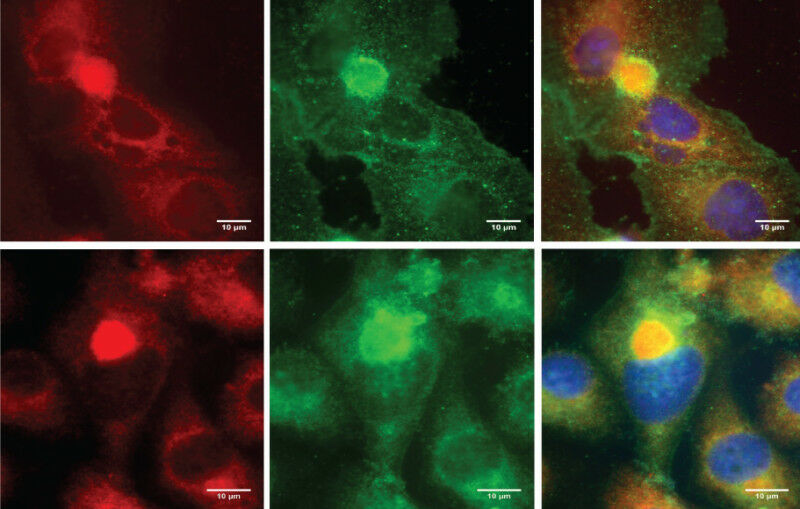
HDAC6 (red) and the cytoskeletal proteins actin and myosin (green) co-localize at ’aggresomes’ — aggregates of misfolded proteins that form within cells in response to stress. Image credits: Longlong Wang/FMI.
HDAC6 ( red ) and the cytoskeletal proteins actin and myosin ( green ) co-localize at 'aggresomes' — aggregates of misfolded proteins that form within cells in response to stress. Image credits: Longlong Wang/FMI. Influenza and other viruses pack their genetic material into a protein shell, which must be disassembled for the viruses to efficiently replicate. But how viruses 'uncoat' their genes remains largely unknown. Now, FMI researchers have identified crucial features of this uncoating process - work that may inform the development of new antiviral treatments. Seasonal flu, caused by the influenza A virus, is an acute respiratory infection that can lead to severe illness or death, particularly among the elderly and people with serious medical conditions. Like other viruses, influenza A is a master hijacker that takes control of the machinery of an infected cell to produce new viral particles.
TO READ THIS ARTICLE, CREATE YOUR ACCOUNT
And extend your reading, free of charge and with no commitment.