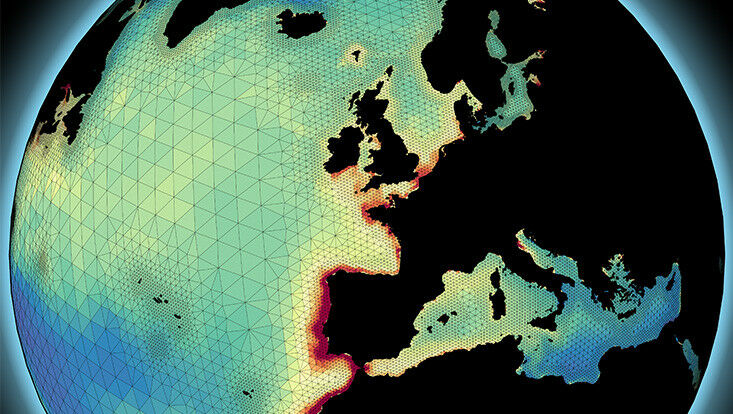
Photo: Hereon/M.Mathis The ocean model ICON-Coast can simultaneously represent physical and biogeochemical processes at different scales. For the first time, a model accounts for the role of coastal seas in the global carbon cycle.
Photo: Hereon/M.Mathis The ocean model ICON-Coast can simultaneously represent physical and biogeochemical processes at different scales. For the first time, a model accounts for the role of coastal seas in the global carbon cycle. Coastal seas form a complex transition zone between the two largest CO2 sinks in the global carbon cycle: land and ocean. Ocean researchers have now succeeded for the first time in investigating the role of the coastal ocean in a seamless model representation. The team led by Dr. Moritz Mathis from the Cluster of Excellence for Climate Research CLICCS at Universität Hamburg and the Helmholtz-Zentrum Hereon was able to show: The intensity of CO2 uptake is higher in coastal seas than in the open ocean. This is evidenced by a study published in the journal Nature Climate Change. To counteract ongoing climate change, it is important to understand how CO2 emissions are distributed.
TO READ THIS ARTICLE, CREATE YOUR ACCOUNT
And extend your reading, free of charge and with no commitment.