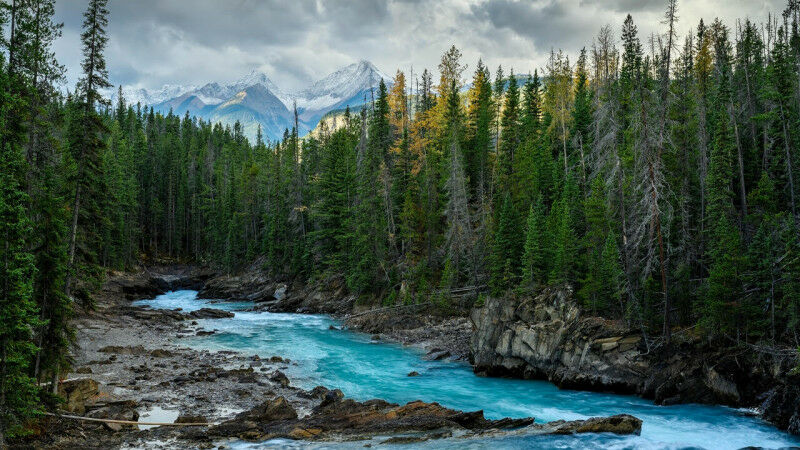
Kicking Horse River carves through Natural Bridge at Yoho National Park, BC
Kicking Horse River carves through Natural Bridge at Yoho National Park, BC Global Futures Findings from a new review strengthen the warnings of a global ecological and relational crisis Though matters of climate change, biodiversity loss and Indigenous Peoples' health and well-being are often considered separately, the three are linked in innumerable ways. While people worldwide are experiencing the impacts of climate change and biodiversity losses, Indigenous Peoples are most disproportionately and acutely affected. Recently reported ecosystem changes and impacts on biodiversity are described as extensive, severe and dramatically declining, including aquatic, atmospheric, terrestrial and most notably, cryospheric changes. Recognizing that Indigenous Peoples' pathways to wellness are through relationality, responsibility and kinship with the land, a team of University of Waterloo researchers set out to examine the extent, range and nature of literature on the subject. Identifying the threats . "A recurring thread we saw woven throughout this literature was that these impacts of climate change, they are rooted in these deep and abiding connections to places that Indigenous Peoples have," says Dr. Laura Jane Brubacher, a School of Public Health Sciences postdoctoral research fellow. Changes to the land, as a result of climate change, include differences in species that are important for Indigenous food systems, medicines and livelihoods, with a disruption to abundance, distribution, migratory patterns and predator-prey balance.
TO READ THIS ARTICLE, CREATE YOUR ACCOUNT
And extend your reading, free of charge and with no commitment.